Archive for the ‘Healthy Meals’ Category
Baked Chicken Breast
 March 20th, 2010 |
  Author:
  This is a relatively quick and easy recipe that you can make in about 20 minutes. Chicken breast is a staple food for people who wish to lose weight, but it can get really boring. If cooked carelessly, it can turn out very dry and tasteless. This recipe will make a very tender and juicy baked chicken breast that is seasoned well and is very tasty.
I prefer range-free chicken that doesn’t contain any hormones or antibiotics. These additives make chickens grow large, and, unfortunately, I believe that they can make people grow large as well. We are able to get range-free chicken at a reasonable price from Trader Joe’s here in Southern California.
Baked chicken breast can be served as a main dish or you can cut it into pieces that you can toss into a green salad.
Ingredients:
- 1 lb boneless, skinless chicken breast (about 2 breasts)
- Thyme
- Basil
- Oregano
- Salt
- Pepper
Preheat oven to 425°. Place chicken breasts in a baking pan and season liberally with thyme and basil and sparingly with oregano. Then sprinkle with salt and pepper. Place in preheated oven and bake for about 20 to 25 minutes. Adjust cooking time according to the weight of the chicken, more or less time for more or less weight. Serve hot, tender and juicy.
Shown below is a shot of the chicken breast in a baking pan with all the seasonings – thyme, basil and oregano, along with salt and pepper. We prefer range-free chicken because it is healthier than chicken raised conventionally. Preheat oven to 425°.
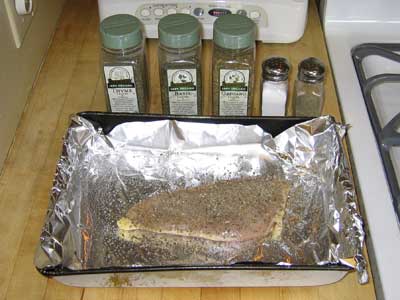
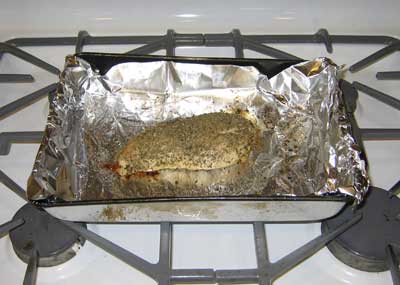
Place in the oven and bake for about 20 minutes. Adjust cooking time according to the weight of the chicken.
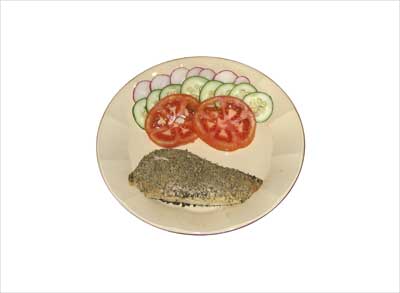
Serve hot with sliced vegetables. Below it is shown with sliced radish, cucumber and tomato.
 Posted in Healthy Eating, Healthy Meals, Heart Healthy Recipes, Herbs and Seasonings |
  Tags: Baked Chicken Breast |
  1 Comment »
Quick and Easy Broiled Salmon
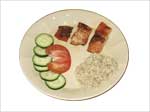 This is a quick and easy recipe that you can make in about 10-15 minutes. I like Alaskan Wild Salmon because it isn’t farm-raised. We are able to get ours from Trader Joe’s here in Southern California.
Typically, a 1 to 1 1/2 lb package will make about 3-4 servings. We like to serve it with brown rice and sliced vegetables or with a green salad. This meal is made from good, whole, natural foods.
Ingredients:
- 1 – 1 1/2 lbs Wild Alaskan Salmon
- Paprika
- Garlic powder
- Lemon slice
Cut salmon into small slices and place in a shallow foil-lined pan. Cutting salmon into small slices will make slightly crispy edges and good texture. Sprinkle with parika and garlic powder. Broil on high for about 10 minutes. When salmon is cooked, remove from broiler and fold the foil over to enclose the cooked salmon and allow it to steam for about 5 minutes to make it tender and juicy. Cooking time will vary according to the thickness of the salmon. Garnish with lemon slice.
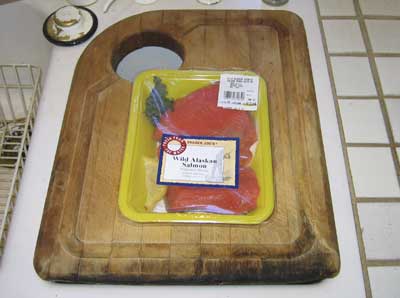
Shown below is a photo of the package of salmon on a cutting board. This is just over 1 lb. We like Wild Alaskan Salmon.
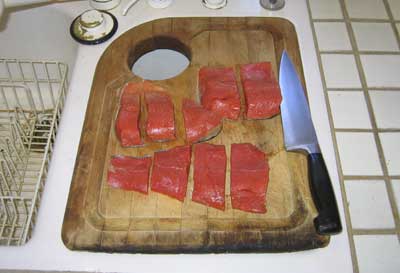
Cut the salmon into small slices for slightly crispy edges and a nice texture.
Place in a foil-lined pan and sprinkle with paprika and garlic powder.
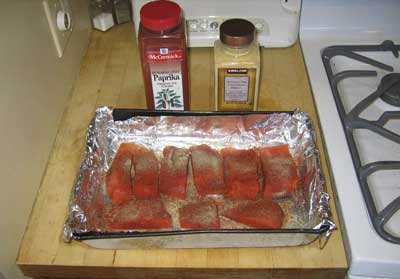
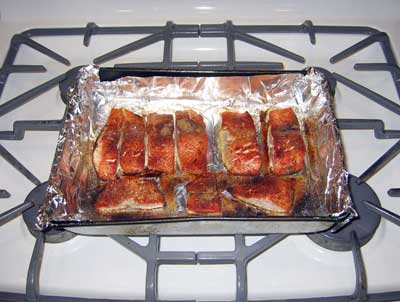
Broil on high for about 10 minutes … cooking time will vary according to the thickness of the salmon. Folding the foil over to completely enclose the salmon and allowing to steam for about 5 minutes will help make it more tender and juicy.
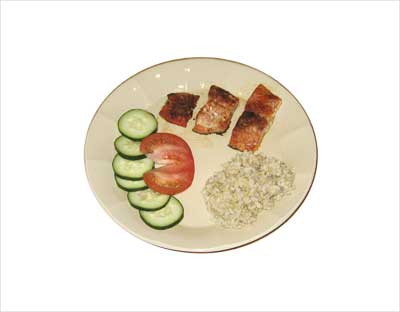
Serve with green salad or sliced vegetables or brown rice. Shown below with sliced cucumbers and tomatoes with a little brown rice.
Posted in Core Foods, Healthy Meals, Heart Healthy Recipes, Quick and Easy Meals |
Tags: Broiled Salmon |
No Comments »
Palak Moong Dal
 This is a delicious recipe for Palak Moong Dal. Dal is a thick soup or other Indian dish made with legumes. Palak Moong Dal is normally made with clarified butter or ghee, but plain butter or even coconut oil can be used in place of ghee if ghee is not available. Palak Moong Dal is a very healthy thick soup made with fresh vegetables and dried mung beans. It takes a couple hours to cook and you have to chop a lot of vegetables, but it is worth the trouble.
Start by obtaining all the ingredients from your grocery store. Some of the items you’ll probably have to buy from a health food store – like dried mung beans and fresh ginger root. We make it using organic vegetables.
Ingredients:
- 1 cup whole mung beans, rinsed clean
- 5 cups water
- 1 tsp salt
- 1/4 tsp turmeric
- 3 cups fresh spinach, cleaned, stemmed & sliced (or a 10-oz pack frozen spinach)
- 2 cups finely sliced onions (approx. 1 large onion)
- 4 cups red ripe tomatoes, sliced and chopped into chunks (approx. 3 large tomatoes)
- 3 cups chopped Anaheim chili peppers (approx. 3 large peppers)
- 1 tbsp finely chopped fresh ginger (minced with a chef’s knife)
- 1 tbsp crushed or minced garlic
- 1/4 cup fresh coriander (cilantro), chopped
- 1/2 tsp garam masala
- 1 1/2 tbsp whole cumin seeds
- 4-5 tbsp ghee (or butter or coconut oil if unavailable)
1. Cook the Dal
Measure out 1 cup of whole mung beans into a large cooking pot with lid. Rinse the beans then strain through a mesh colander 5 or 6 times until beans are clean. Add 5 cups water to the pot and then add 1/4 tsp turmeric and 1 tsp salt. Place lid on pot and heat over high flame just until the water starts to boil, then turn the flame way down and cook slowly over a low flame for 1 1/2 hours, stirring occasionally with a wooden spoon. Cook very slowly over a low flame to make a nice, creamy soup. After the mung beans have cooked for 1 1/2 hours, add the sliced spinach, then cover the pot and simmer for 15 minutes.
2. Prepare the “Spicy Tomato Butter”
While the dal is cooking, chop all the vegetables and prepare the spicy tomato butter. It is called “spicy tomato butter” because normally, you would use ghee (clarified butter) but you could also use butter or coconut oil if ghee is unavailable. The vegetables are cooked in a large skillet, adding ingredients gradually taking care to time everything very exactly.
- Start by adding ghee to the skillet, then bring to a boil and then add the whole cumin seeds. Cook the cumin seeds for about a minute or two until they begin to darken.
- Next, turn down the heat to a medium flame and add the sliced onions. Cook for about 10 to 12 minutes, stirring continuously with a wooden spoon until the onions are soft and translucent and the flavor of the cumin seeds is infused into the onions. There should also be a very nice aroma of cumin seed at this stage.
- Next, add the chopped chili peppers, chopped coriander, ginger and garlic. Keep stirring with a wooden spoon and cook at this stage for a couple of minutes. Just cook long enough at this step to infuse the flavors a little bit.
- Next, add the chopped tomatoes, then stir with a wooden spoon and cover the skillet and cook for about 20 minutes until the tomatoes are broken down and a are reddish yellow color. Stir occasionally during this time, taking care not to burn the vegetables. Add a little water if needed and adjust the flame as needed.
3. Add the Cooked Vegetables to the Dal
After the vegetables are cooked and the mung beans and spinach have simmered for 15 minutes, add them to the dal. At this time, add 1/2 tsp of garam masala and perhaps another 1/2 to 3/4 tsp of salt (to taste). Stir with a wooden spoon, then cover the pot and simmer for an additional 15 minutes to marry up all the flavors. Serve hot.
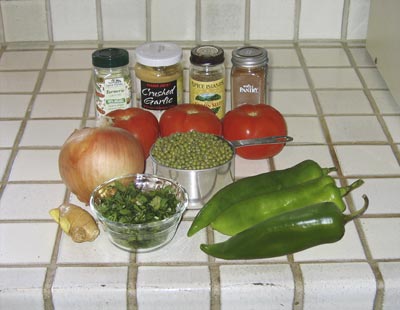
Shown below is a photo of most of the ingredients. Starting from the back row and going left to right: turmeric, chopped garlic, whole cumin seeds, garam masala, 3 large tomatoes, onion, dried mung beans, ginger root, coriander (cilantro) and Anaheim chili peppers.
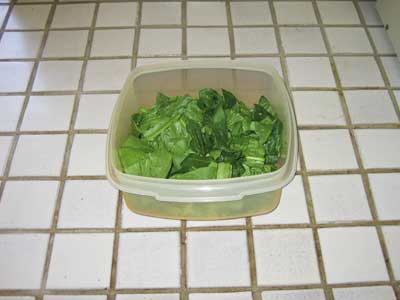
Shown below is the rest of the ingredients – fresh spinach.
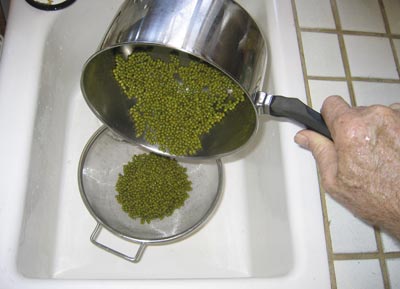
Start by rinsing the mung beans. Rinse them a few times until the water is clear, straining through a mesh colander after each rinsing.
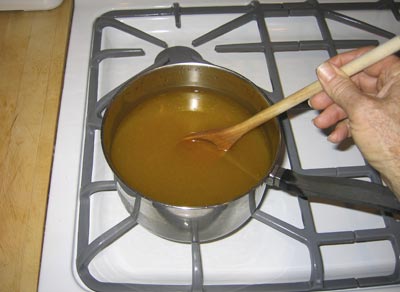
Add 5 cups of water to the rinsed mung beans plus 1/4 tsp. of turmeric and 1 tsp. of salt. We are using sea salt. Place the pot over a high flame then cover and bring to a boil. After it comes to a boil, turn the flame way way down and cook slowly for 1 1/2 hours. Cook it over a low flame to get a creamy texture. Cover it with a lid while cooking.
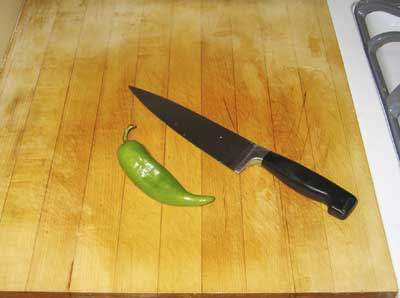
While the dal is cooking, chop up all the vegetables. Start with the Anaheim chili peppers.
Cut the end off the pepper, then cut the pepper in half.
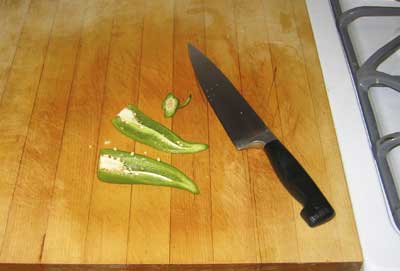
Remove all the seeds and ribs.
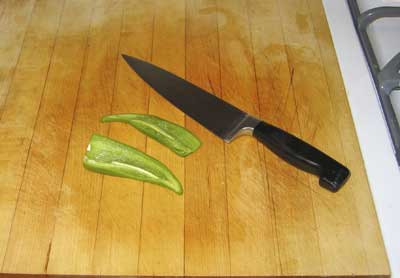
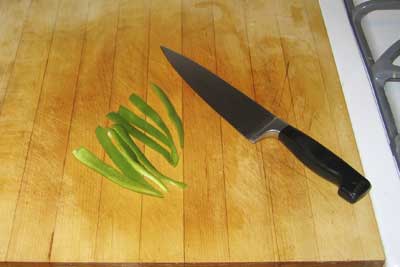
Slice the pepper halves lengthwise into about 4 or 5 slices each.
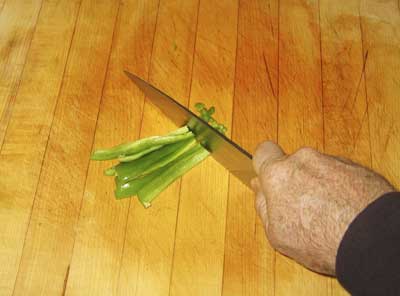
Now chop into medium sized chunks. Repeat for all three peppers.
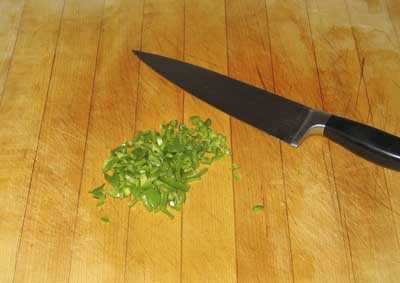
Gather up al the chopped peppers into a bowl and set aside for now.
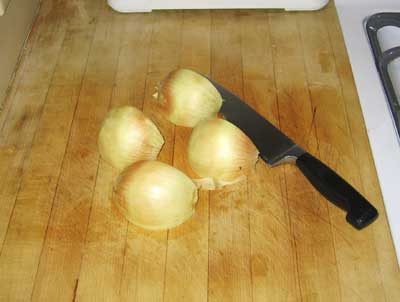
Slice the onion into thin slices. Start by quartering the onion. If you are using two small onions instead of one large onion, you can cut them into halves instead of quarters.
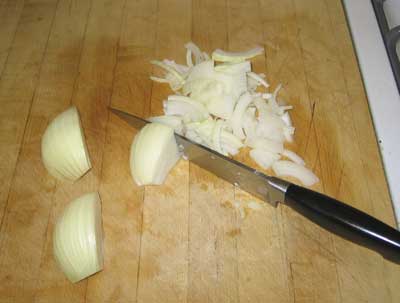
Peel the skin off and slice each part into thin slices.
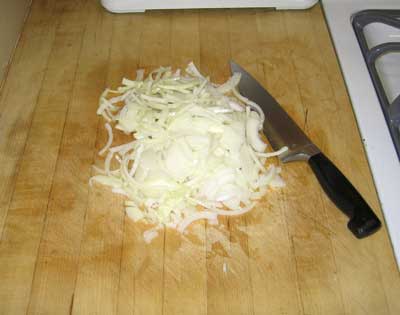
When the onions are all sliced up, set them aside.
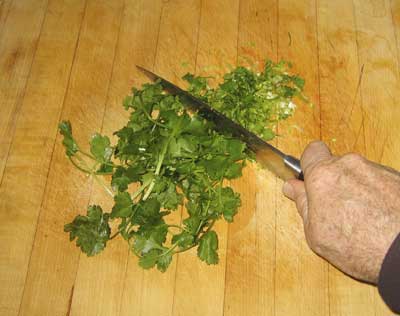
Chop the fresh coriander (cilantro).
Peel the fresh ginger root and slice up into chunks.
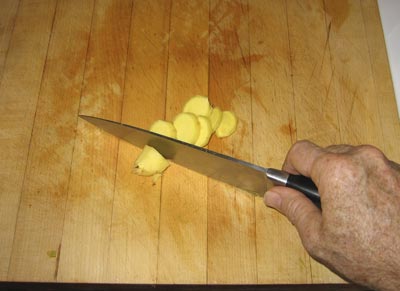
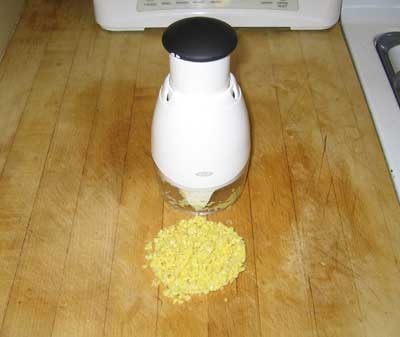
Either use a chopper or chop the ginger root with a chef’s knife. Chop it up real fine – nearly minced.
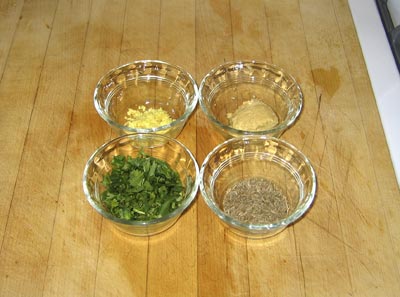
I like to prepare all the chopped ingredients in bowls so they are ready to add when the time comes. Shown below left to right, back to front: ginger root, chopped garlic, coriander and whole cumin seeds. Lately I’ve been doing this a little differently. I place all the chopped peppers in a bowl, then add the coriander, ginger and garlic over the top of the peppers because they are all added to the skillet at the same time.
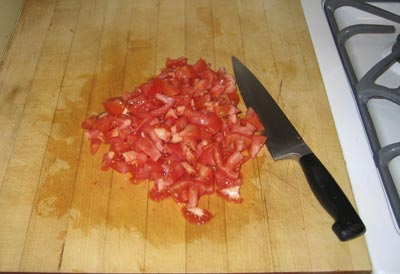
Finally, chop all the tomatoes and set them aside in a bowl.
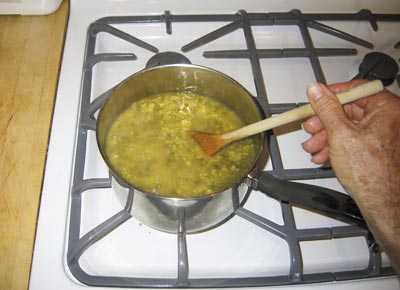
Check the dal and stir it with a wooden spoon once in awhile. Keep it covered while cooking.
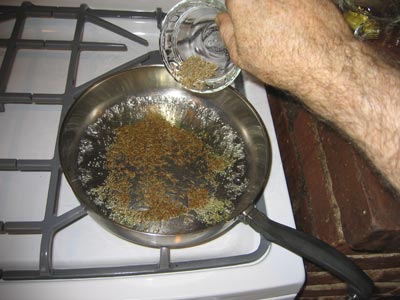
In a large skillet, add about 4-5 tbsp of ghee or butter over a medium flame. Then add the whole cumin seeds.
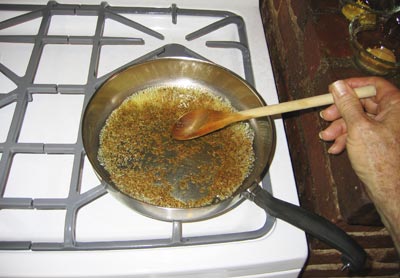
Cook the cumin seeds for a minute or so until the seeds start turning dark.
Add the sliced onions, then cook over a medium flame for about 10-12 minutes. Stir continuously with a wooden spoon.
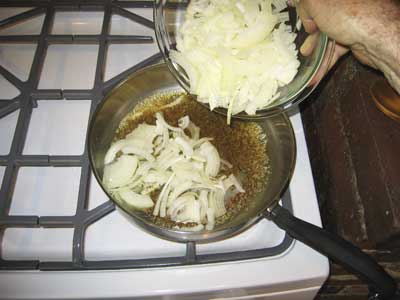
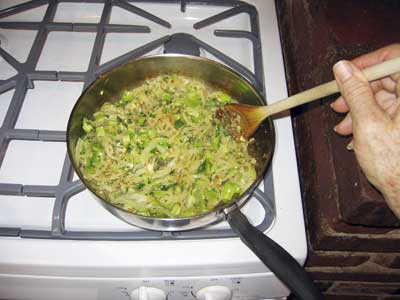
After the onions have cooked for about 10-12 minutes, add the chili peppers, coriander, chopped garlic and ginger root. Cook for 2 minutes and stir with a wooden spoon.
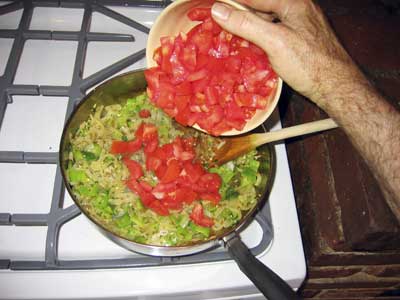
After the chili peppers, coriander, chopped garlic and ginger root have cooked for 2 minutes, add the chopped tomatoes.
Stir all the vegetables together with a wooden spoon.
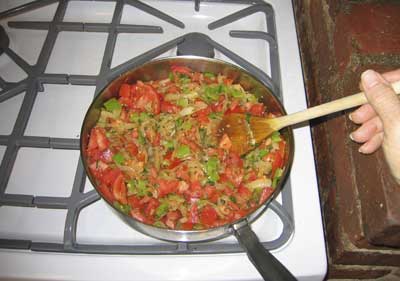
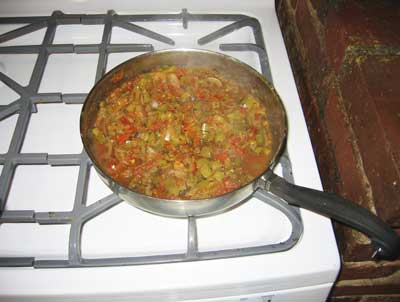
Cover the skillet and cook for 20 minutes, stirring occasionally.
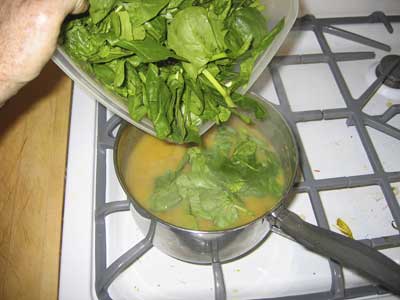
After the dal has cooked for 1 1/2 hours, add the fresh spinach. I like to cut the spinach into smaller pieces so they aren’t too stringy in the finished soup.
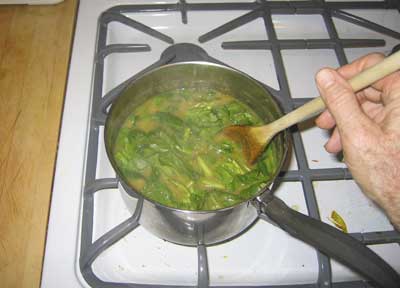
Stir the fresh spinach into the dal until it is completely covered.
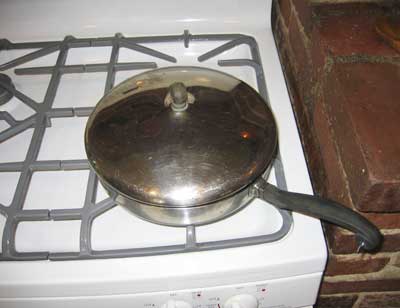
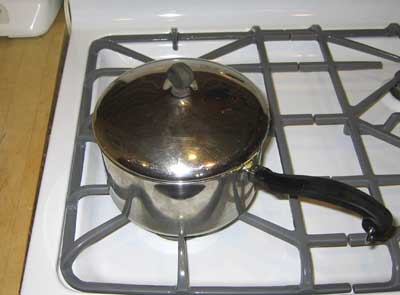
Cover the pot with a lid and continue cooking over a very low flame for another 15 minutes.
When the vegetables have finished cooking 20 minutes after the tomatoes have been added, they are ready to be added to the dal.
Add the cooked vegetables to the dal.
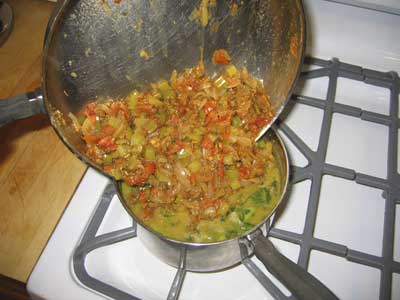
Stir the cooked vegetables into the dal and add 1/2 tsp. of garam masala. At this time I like to add about another 1/2 to 3/4 tsp. of salt.
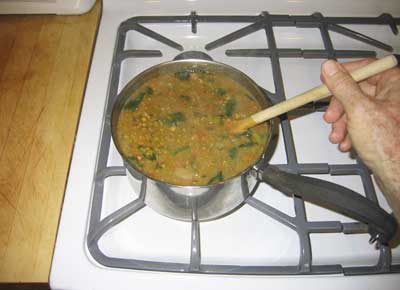
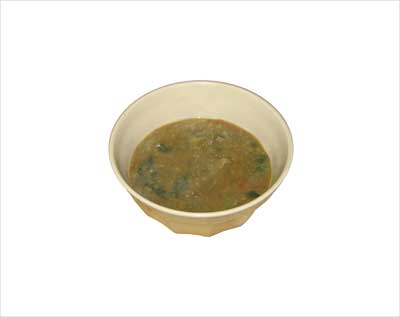
Simmer for about 15 minutes to marry up all the flavors, then serve hot. Serve with brown rice and some naan bread. Naan bread is really good but it can make you hungry so go easy on it.
Posted in Healthy Meals, Heart Healthy Recipes, Indian Cooking, Soup Recipes, Soups |
Tags: Indian Cooking |
No Comments »
Ginger Turkey Curry with Brown Rice
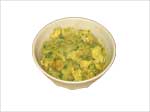 This is a delicious curry recipe that is relatively easy to make. You will need some turkey stew meat (turkey breast with all the fat and skin removed), fresh ginger root, Anaheim chili pepper, onion, garlic, plain yogurt, fresh coriander (cilantro), chicken broth and some curry powder. We buy our curry powder by the pound because it is more economical than what is available in grocery stores.
This recipe makes about 4 servings. It can be served by itself, but is best when served over brown rice. This isn’t exactly a core food because it is made with a dairy product (yogurt) but it is still good. It is made with good, whole, natural foods.
Ingredients:
- 2 cups sliced onions
- 1 chopped green chili pepper (Anaheim chili)
- 1 tbsp. fresh ginger root, finely chopped
- 1 clove garlic, finely chopped
- 1 lb. turkey stew meat, bite sized pieces
- 1 tbsp. curry powder
- 1 cup chicken broth
- 1/4 cup chopped coriander (cilantro)
- 5 tbsp. plain yogurt
- cooked brown rice
Start by cooking the brown rice. Use a rice cooker or tightly covered pot. While the rice is cooking, slice the onions into thin slices. For large onions, you can quarter them first. Chop the chili pepper, then finely chop the ginger and garlic (peel the ginger root before chopping). Add the sliced onions, chopped chili pepper, garlic and ginger to a large skillet along with a tbsp or two of coconut oil or butter, then cook over a medium flame until the onions are soft and slightly translucent (about 10 minutes). Add water if needed to keep from burning.
Cut the turkey into bite size pieces and add them to the skillet along with the curry powder. Mix thoroughly and cook for about 2 minutes until the curry is distributed evenly and the meat is slightly seared.
Add the chicken broth to the skillet, bring to a boil and simmer for about 5 minutes. Do not overcook the turkey.
When the chicken broth and curry are a smooth consistency, turn off the flame add the yogurt and coriander (cilantro), then stir to thoroughly mix everything.
Serve in bowls over brown rice.
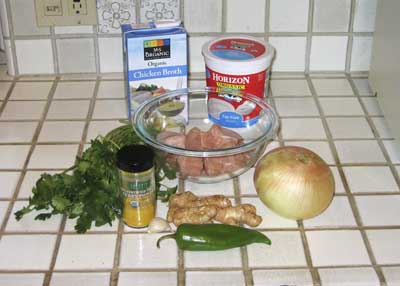
Shown below is a photo of all the ingredients: starting in back and going left to right – chicken broth, plain yogurt, cliantro (coriander), curry powder, turkey meat, onion, garlic clove, ginger root and Anaheim chili pepper. Start by cooking the brown rice. I like to use a rice cooker.
Next, cut up all the vegetables. Start by slicing the onion. This is a large onion so I am going to cut into quarters first.
Slice the onion into thin slices. This recipe works better with sliced onions rather than chopped onions. It makes for a better texture.
Now all the onions are sliced up…
Next, prepare the chili pepper by removing all the seeds and ribs.
Start by cutting off the end, then by slicing the pepper down the middle.
Scrape out all the seeds and ribs by hand.
Slice each of the pepper halves into long thin slices.
Arrange the slices into a bunch, then chop the pepper into small chunks.
Now the pepper is all chopped up …
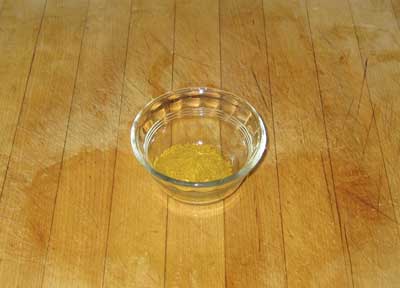
Measure out the curry powder into a dish.
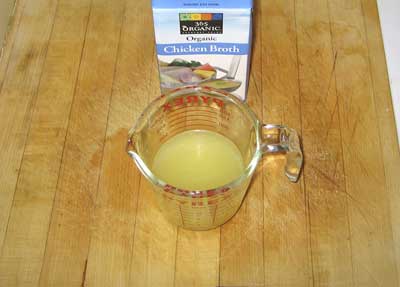
Measure out a cup of chicken broth …
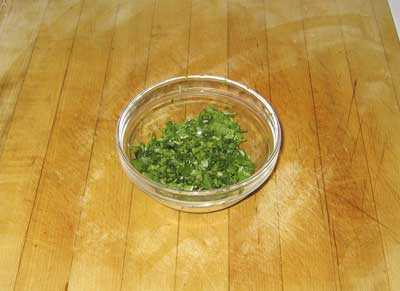
Chop up the fresh coriander (cilantro). Fresh coriander goes bad real fast even when kept in the refrigerator, so only buy as much as you need.
Measure out the chopped coriander into a dish and set aside for now …
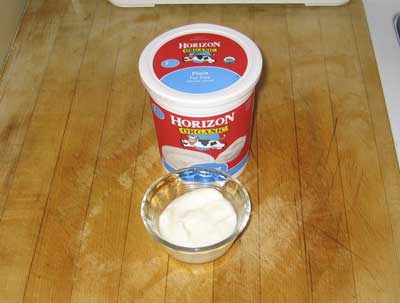
… Same thing for the yogurt … measure it out into a dish and set it aside for now …
Next, chop up the garlic clove and fresh ginger root. Here I am using a chopper, but you can do it just as easily with a good chef’s knife. Peel the ginger first.
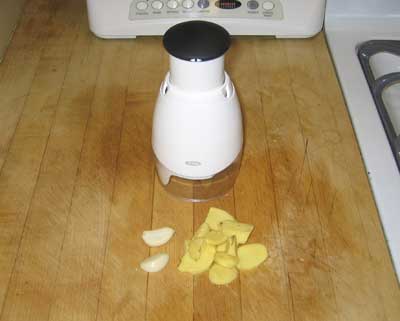
Now the garlic and ginger is all chopped up ….
Cut the turkey meat into small bit sized chunks.
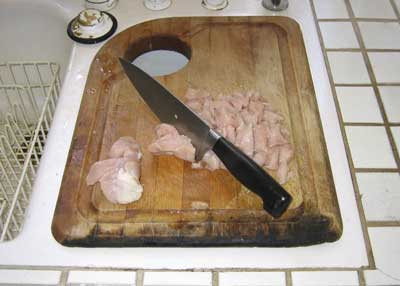
Now the meat is all chopped up and ready to go …
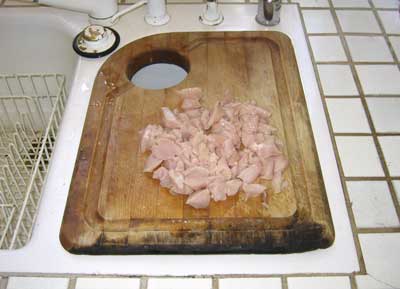
Now that the vegetables and meat have all been sliced and chopped and all the ingredients have been set aside in dishes, it’s time to cook. Start by adding a little butter or coconut oil to the skillet and then add the onions, chili pepper, garlic and ginger.
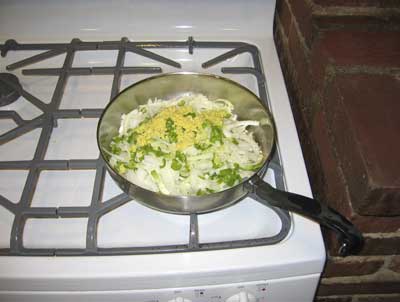
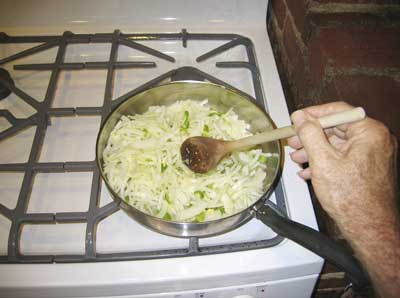
Cook over a medium flame stirring occasionally with a wooden spoon. Cook for about 10 minutes or so until the onions are soft and translucent.
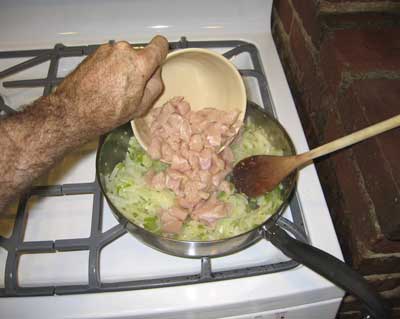
Next, add the turkey meat …
… followed immediately by the curry powder. Keep cooking over a medium flame.
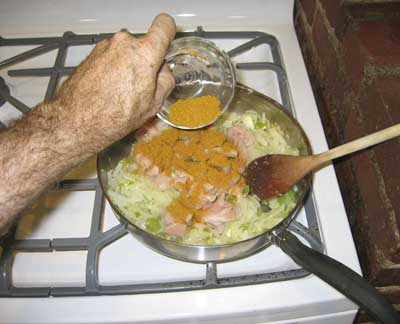
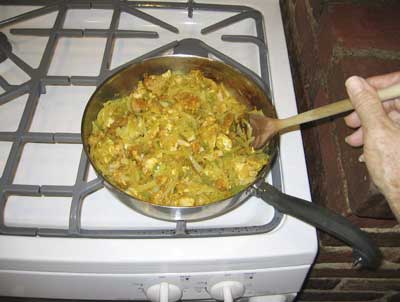
Stir everything together until the curry is evenly distributed and the meat is slighty seared. This should take about 2 minutes. Don’t overcook or burn the turkey.
Then add the chicken broth …
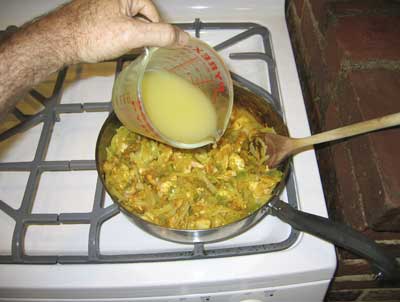
Cook for another 5 minutes or so. Again, don’t overcook the turkey. Cook until the sauce is of a smooth consistency.
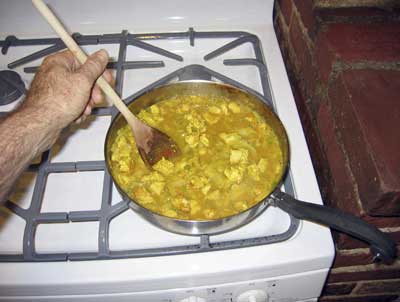
Now turn off the flame and add the yogurt and coriander.
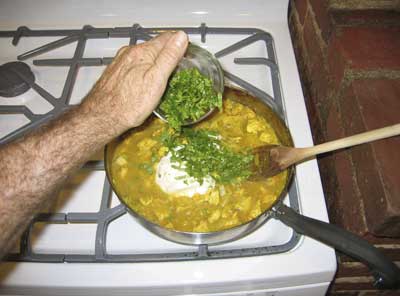
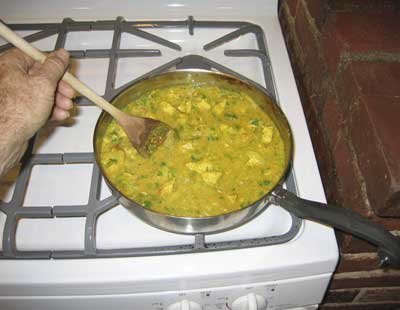
Stir everything together until all is thoroughly mixed. Now it is ready to serve.
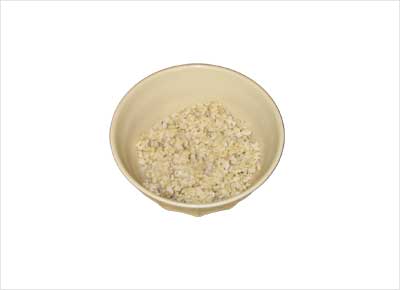
Place some cooked brown rice into a bowl.
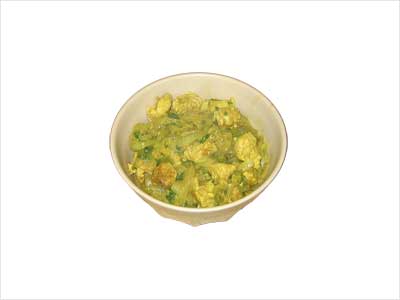
Cover with a serving of the cooked ginger turkey curry.
Posted in Curry Recipes, Healthy Eating, Healthy Meals, Heart Healthy Recipes |
Tags: Curry Recipes, Healthy Cooking |
No Comments »
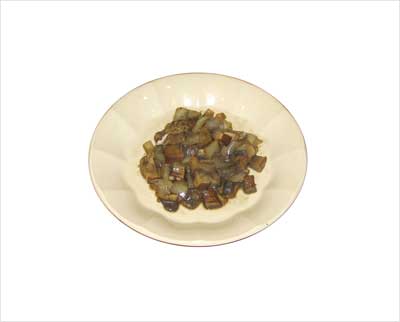
Portobello Mushrooms with White Wine
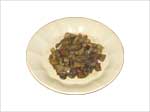 Portobello mushrooms are very popular and readily available in most local grocery stores and supermarkets. They are high in niacin, potassium and selenium. This is a delicious recipe that you can make very quickly and easily. It is cooked with white wine. You can make a non-alcoholic version simply by substituting the juice from 1/2 lime plus about 1 tablespoon of water instead of the white wine. The wine I used in this particular recipe was very inexpensive (Charles Shaw – also known as "Two Buck Chuck").
This is a good side dish and goes well with fish or meat as the main dish. They will make an excellent meal when served with steak, lamb or fish along with a tossed green salad or sliced tomatoes.
Ingredients:
- 4 Portobello mushrooms
- 1 lg onion
- 6 cloves garlic
- 1/3 cup white wine
- 1 tbsp olive oil
- Salt
Cut Portobello mushrooms into 1/2 inch to 3/4 inch cubes. Chop the onion. Chop garlic cloves and place in frying pan. Sauté over a medium heat until garlic begins to look toasty. Add olive oil and turn heat down. Continue to sauté until garlic is soft and light brown in color, then add chopped vegetables to the pan. Salt to taste, then add white wine. Vegetables will be done when soft and brown.
Alternately: Use juice from 1/2 lime plus about 1 tbsp of water in place of the white wine.
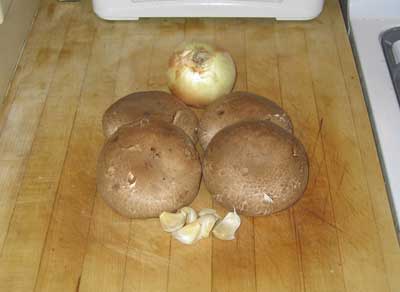
Shown below is a photo of the ingredients: One large yellow onion, four portobello mushrooms and six cloves of garlic.
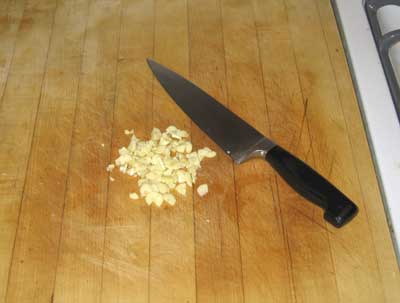
First, chop the garlic … not too fine and definitely not minced.
Slice each mushroom into 3/4 inch slices.
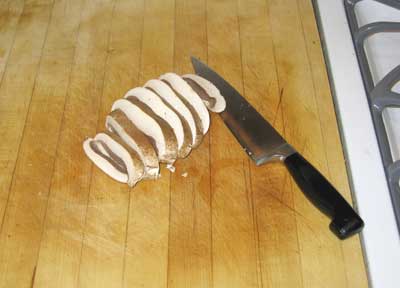
Cutting crosswise, make additional 3/4 inch slices to make 3/4 inch cubes.
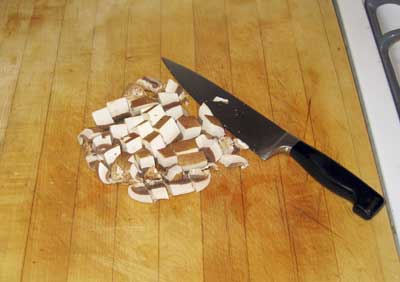
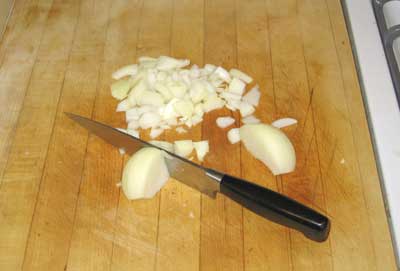
Then chop the onions.
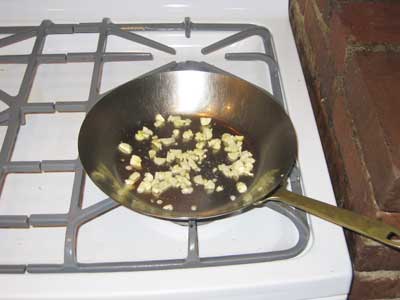
Add the chopped garlic to the pan and sauté the garlic over a medium flame.
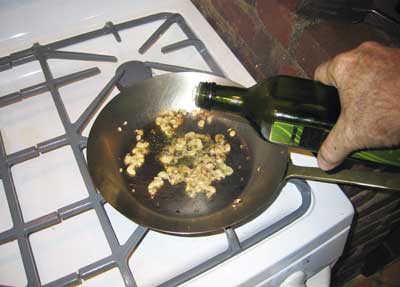
Add a tablespoon of olive oil and continue to sauté the garlic until it is soft and light brown in color.
Next, add the cubed mushrooms.
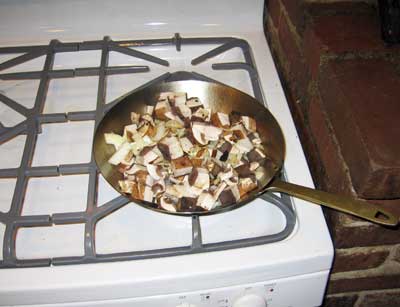
Then add the chopped onions, followed by the white wine.
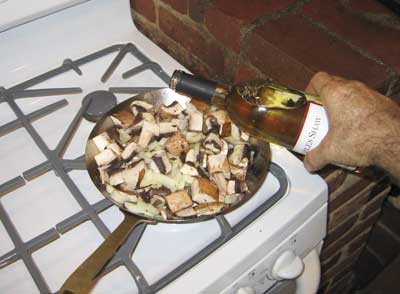
Continue cooking for about 8 to 10 minutes.
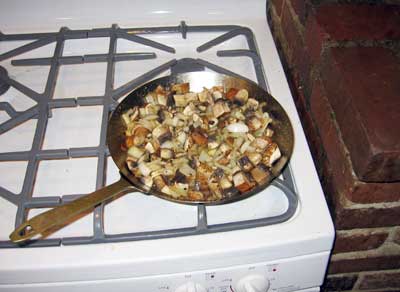
Continue cooking until all the vegetables are soft and brown.
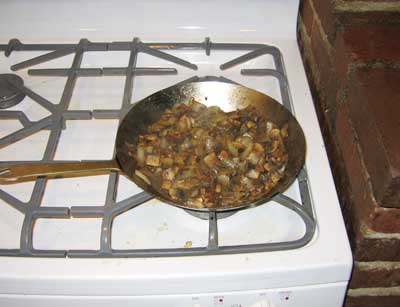
Serve immediately.
Homemade Refried Beans
This is my recipe for homemade refried beans. There are numerous recipes for refried beans. The traditional fat used has been lard. Finding a good source for healthy lard is not easy. You need to know a butcher that can get it for you. Refried beans are excellent for healthy eating or for losing weight.
First you will need to cook the pinto beans. You should soak the beans in water overnight, then on the following day it takes about 3-4 hours to cook them. This recipe uses some chili powder, oregano and other seasonings to add spice. You will sauté some chopped onions in a little lard, butter or coconut oil, then add crushed or minced garlic, then add seasonings to gradually infuse more and more flavor. At the end of the cooking you will add some fresh squeezed lime juice. You add it at the end to keep from cooking away the flavor.
Fat Free Refried Beans
Ingredients:
- 4 1/2 cups cooked beans
- 1 cup chopped onions (about 1/2 large onion)
- 1 tbsp minced or crushed garlic
- 2 tbsp chili powder
- 2 tsp ground cumin
- 2 tsp salt
- 1 tsp oregano
- 1/2 juice from fresh squeezed lime (juice from 1/2 lime)
Mash the beans in a bowl with a masher and set aside for now. Add chopped onions to a heavy skillet and cook until soft and beginning to brown a little. Add 1 tbsp of water at a time to keep skillet moist and to keep from burning the onions. Then add garlic and continue cooking until the onions are a light brown color. Add mashed beans to skillet and mix thoroughly, then stir in the chili powder, cumin, oregano and salt. Continue to cook the beans in the skillet and stir with a spatula until it is a thick paste. At that time, add the lime juice and thoroughly mix it into the cooked beans. Turn off the heat once the lime juice is mixed in to avoid cooking away the lime flavor.
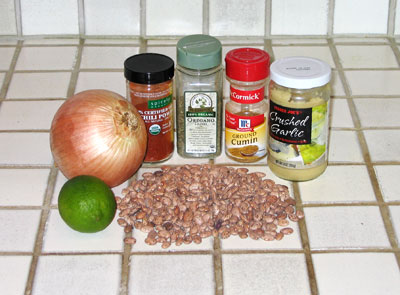
Shown below is a photo of all the ingredients. Starting in the upper right corner and moving counter-clockwise: crushed garlic, ground cumin, oregano, chili powder, onion, lime and dried pinto beans.
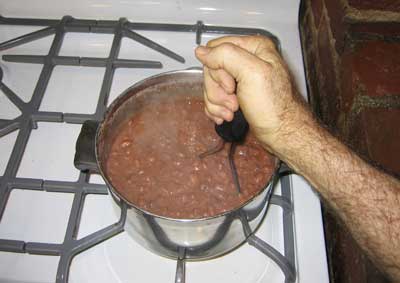
Start by cooking the pinto beans. Please see this post for complete instructions. After cooking the beans, use a masher to mash them while in the pot.
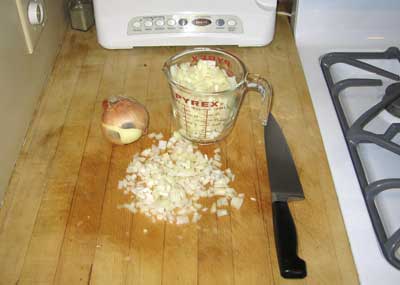
Chop the onions …
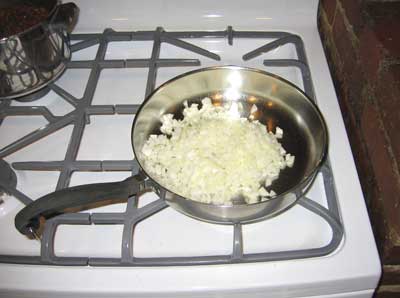
Place the chopped onions in a large skillet.
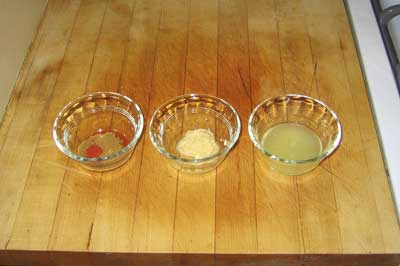
Measure out portions of the other ingredients and set them aside in dishes. Shown below (left to right): all the dry ingredients in the dish on the left (ground cumin, oregano, chili powder and salt), then crushed garlic in the middle dish followed by fresh squeezed lime juice in the last dish.
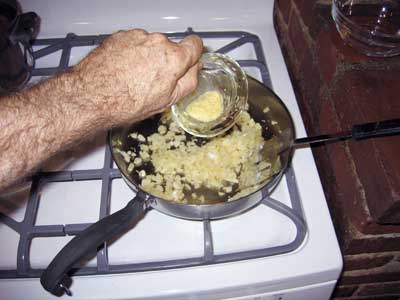
Sauté the chopped onions in water, gradually adding more water as necessary – about a tablespoon at a time – to keep the onions from sticking to the skillet or burning. After cooking for about 8 minutes, add the crushed garlic.
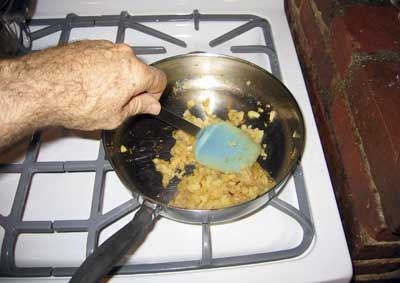
Continue to cook the vegetables for about 2 minutes more. Just infuse the flavors into the vegetables.
When the onions and garlic are cooked, add the mashed beans.
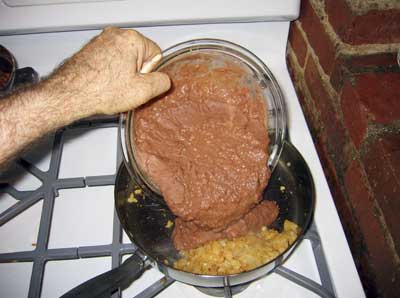
Use the masher or wooden spoon and continue to cook the vegetables and mashed beans together. After a minute or two, add the dry seasonings (ground cumin, oregano, chili powder and salt).
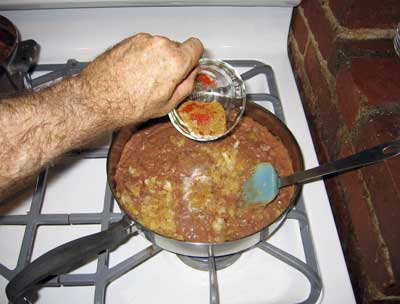
Continue to cook and stir the mashed beans with a masher or wooden spoon for another minute or two, then add the fresh squeezed lime juice.
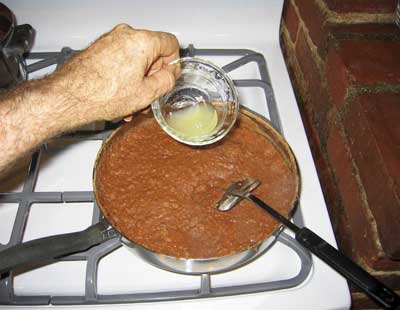
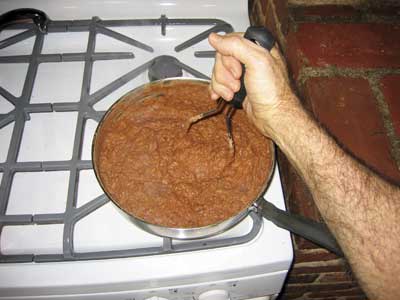
Using the masher, thoroughly mix the fresh squeezed lime juice throughout the mashed beans. When everything is all mixed together, the refried beans will be done.
Posted in Cooking to Lose Weight, Core Foods, Healthy Eating, Healthy Meals, Heart Healthy Recipes, Mexican Food |
Tags: Refried Beans |
1 Comment »
How To Cook Pinto Beans
Pinto beans are among the most common staple foods in many cultures. They are very healthy and inexpensive. Pinto beans are the most highly consumed dried bean in the U.S.A. and the are very easy to cook. Pinto beans are an excellent source of protein – especially when combined with rice. Proteins are composed of amino acids. The body can produce all but 10 amino acids. These 10 amino acids are called “essential amino acids”. Foods containing all of these essential amino acids are called “complete proteins” and foods lacking in certain essential amino acids are called “incomplete proteins”. Some vegetables lack certain essential amino acids but when combined in the same meal with other vegetables containing the missing amino acids, a complete protein will result. Thus, certain combinations of vegetables with incomplete proteins balance each other out to form complete proteins. Beans and rice is one such combination.
In a recent Oprah Winfrey show, Dr. Mehmet Oz and freelance writer Dan Buettner discussed the “blue zones” – areas of the planet where people often live to be 100. Dan Buettner emphasizes what he calls the “Mesoamerican trifecta” — the predominant diet in much of Central America for the last 3,500 years. Mr Buettner states that “The diet consists of lightly salted corn tortillas, beans and squash” … which is “arguably the best longevity food ever invented.” Pinto beans are good for heart health, they are very high in fiber and help to stabilize blood sugar levels, thereby keeping you from getting hungry.
Fat Free Pinto Beans
- 3 1/2 cups pinto beans
Sort through the beans and pull out any stones or shriveled beans. Add beans to a pot with a lid. Add water to cover beans with 1 to 2 inches of water. You can’t add too much water because you’re going to rinse them the next day, anyway. Let soak overnight in the refrigerator. The next day, rinse the beans. This is an important step because the overnight soaking will pull out an enzyme that causes gas and that enzyme will now be in the water. So you rinse away all of that water along with the enzyme that causes gas so you get rid of it. Now add new water to the pot of beans as needed to just cover them. Heat over medium flame until water starts to boil. Reduce heat to simmer for 2 1/2 to 3 hours. Check water level after about 20 minutes, then every 30 minutes afterwards, adding water as needed to keep water level just to the top of the beans. Do not allow the water to boil away and burn the beans. Stir with wooden spoon occasionally. Cook until beans are soft and the cooking liquid is of good consistency. Never add salt until beans are fully cooked.
Fat Free Pinto Beans
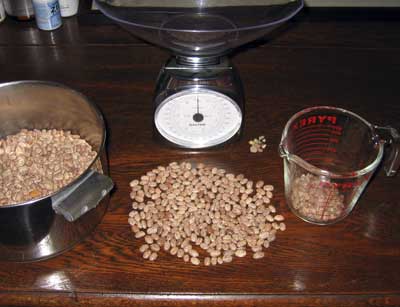
Start with a medium sized cooking pot with lid. I like to cook 3 1/2 cups of dried beans at a time. Measure out the beans and spread them out on a clean, flat surface, then sort through them and discard any stones or shriveled beans.
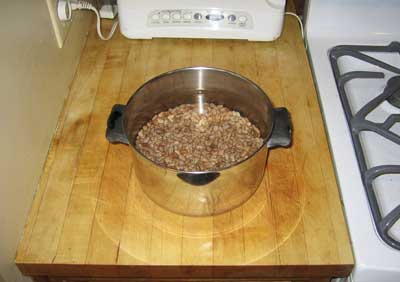
Cover the beans with 1 to 2 inches of water. Add as much water as you want. You can’t add too much water at this step. Place the lid on the pot and set the beans in the refrigerator and allow to soak overnight.
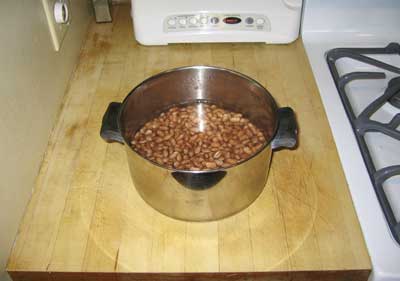
The next day, rinse away all of the soaking water and add new water. This step will get rid of all the enzyme that causes gas because the soaking water will contain the enzyme. Add enough new water to just cover the beans.
Place the pot over a flame and bring water to a boil, then reduce to a very low flame. Allow to cook for 2 1/2 to 3 hours.
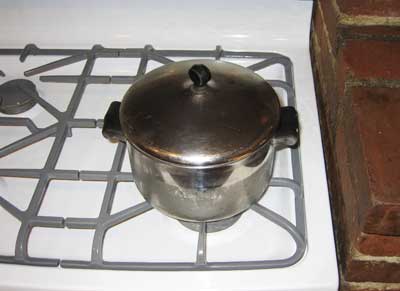
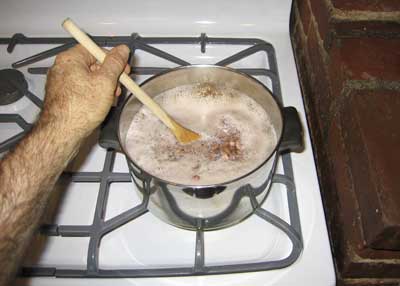
Shown below is a photo taken just after water begins to boil and just before reducing the flame. Stir occasionally, checking the water level periodically and adding more water as necessary to just cover the beans during cooking. It has been my experience that water needs to be added around the first 20 minutes after boiling.
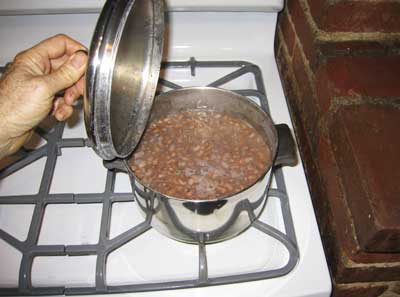
During the last 30 to 45 minutes, there may be a tendency for the beans to stick to the pan, so be careful around this time. Stir the beans and make sure the flame is very low and that the water level covers the beans.
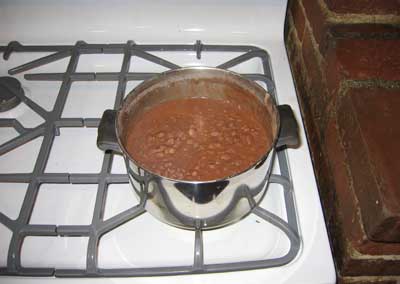
The beans should be fully cooked in no more than 3 hours. Once you have cooked the pinto beans, you can make them into refried beans, or you can allow to cool and place in a covered container in the refrigerator. You can also freeze some of them if you like, then place in the refrigerator after thawing.
Delicious Split Pea Soup
 This is a recipe for split pea soup that I accidentally came up with. It started out as a recipe for Green Dal that was printed on a package of split peas. Green Dal is an Indian soup. I was not familiar with Indian cooking at that time. One of the ingredients was Garam Masala. I never bought Garam Masala before. The store was out of Garam Masala that particular day, so I bought Tikka Masala instead. That was a fortuitous accident because the result was really good. Tikka Masala goes really well with really split peas.
This is a very easy soup to make. It takes about an hour and a half. The split peas take an hour to cook, plus another 15 minutes to blend the cooked onions plus some time to chop the onions and prepare the ingredients. This is also a very healthy recipe. It will give you lots of energy without making you hungry.
Delicious Split-Pea Soup
- 1 cup Organic Green Split Peas (dry)
- 3 cups water
- 1 tsp. Sea Salt
- 2 cups chopped yellow onions
- 3 cloves garlic, finely chopped
- 1 tbsp. Tikka Masala Sauce
- 1/4 tsp. pepper
- Salt to taste
Rinse and sort peas, drain and place in a medium saucepan with 3 cups of water, tsp. sea salt and l/2 cup of the chopped onions.
Bring to a boil, reduce heat, cover and simmer for about 1 hour until the peas are tender.
While the peas are cooking, sauté the remaining onion with a little butter or coconut oil along with the garlic and Tikka Masala Sauce in a skillet. Add a little water if needed. Cook over medium heat, stirring occasionally until they are soft and just beginning to turn golden brown (about 10-15 minutes).
When the peas are cooked, add the sautéed onion mixture, stirring to combine. Simmer 10-15 minutes to blend flavors. Season with salt and pepper.
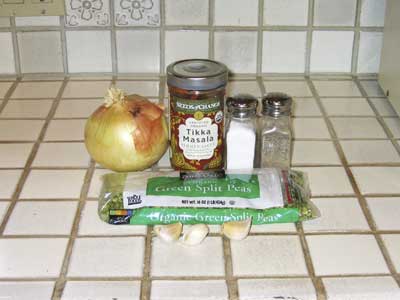
Shown below is a shot of all the ingredients. Starting in the back row and going clockwise: onion, Tikka Masala sauce, salt, pepper and dried split peas. These are organic split peas, but you can make the recipe with conventional split peas.
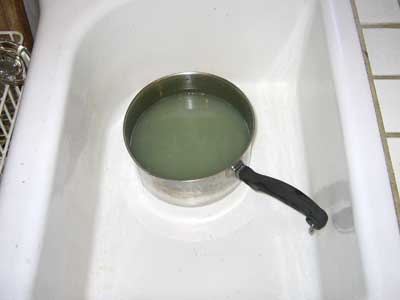
Measure out the split peas and place into a pot. Rinse thoroughly. As you can see by the cloudy color of the water, you will have to rinse them about 8 to 10 times.
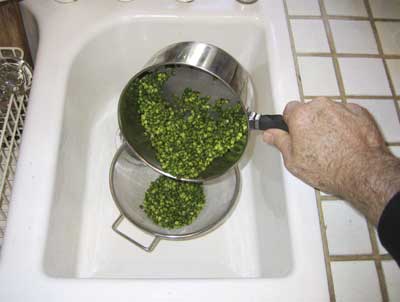
Pour the rinse water out through a strainer after each rinse.
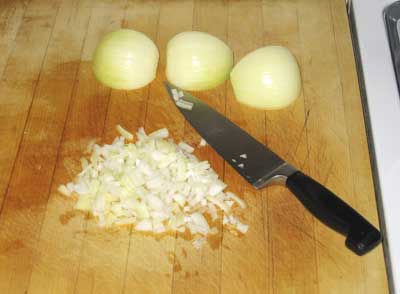
Quarter the onion, then peel and chop it. Place 1/4 of the chopped onions (1/2 cup) into the pot with the split peas.
Cook the split peas and chopped onions for 1 hour. Cook them slow over a low flame. Stir occasionally to keep from sticking to the pan. If they start to stick to the pan, then lower the flame.
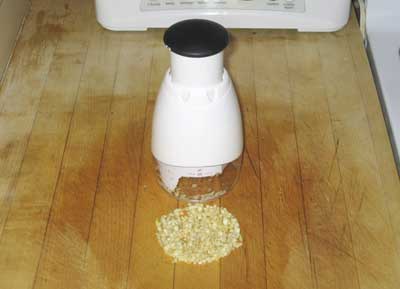
While the split peas are cooking, chop the cloves of garlic. Here I am using a chopper.
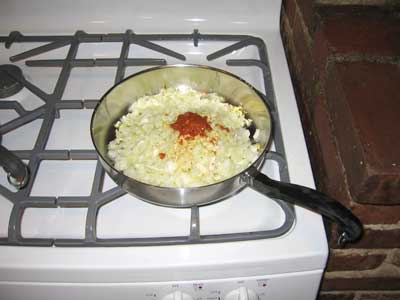
Add the remaining chopped onions, chopped garlic and Tikka Masala sauce to a pan. Add a little butter or coconut oil to the pan and start cooking the vegetables. Add more water if necessary to keep from burning the vegetables while they are cooking. Cook them for about 10 to 12 minutes.
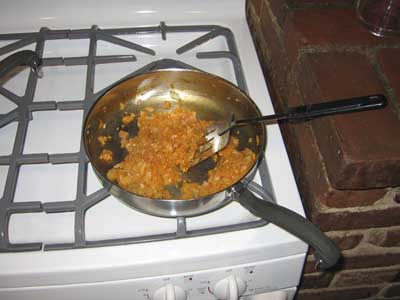
Cook the vegetables until they are soft and light golden brown in color.
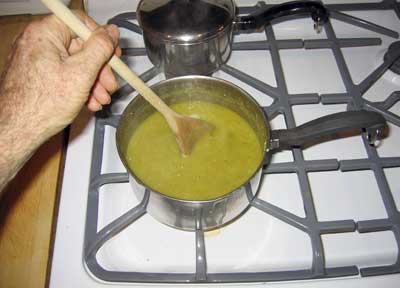
After the split peas have cooked for an hour, add the cooked onions plus 1/4 tsp of pepper to the soup. Add salt as needed for taste.
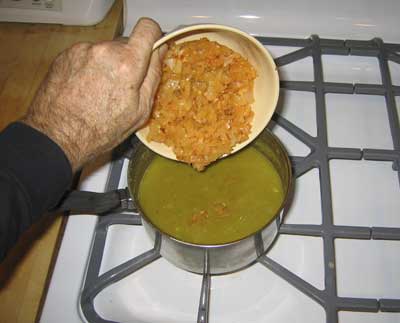
Cook for an additional 15 minutes to allow the flavors to blend thoroughly.
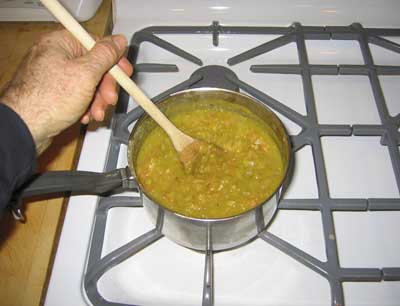
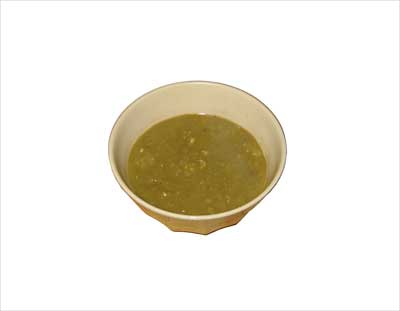
Serve hot. This is a delicious, healthy soup.
Instant Brown Rice Curry
If you like brown rice and if you like curry dishes, then you can spice up a bowl of plain brown rice with a little curry powder and a dash of salt. It’s just a simple thing you can do to add a little variety.
Instant Brown Rice Curry
- 1 cup cooked brown rice
- 1/4 tsp curry powder
- Dash salt
Add 1 cup cooked brown rice to bowl, then mix 1/4 tsp. curry powder and a dash of salt. Serve while hot.
Add a cup of fresh, cooked brown rice to a bowl and mix in 1/4 tsp of curry powder and a dash of salt. This is very quick and easy. If you like curry dishes, you should like this.
Milled Flaxseed
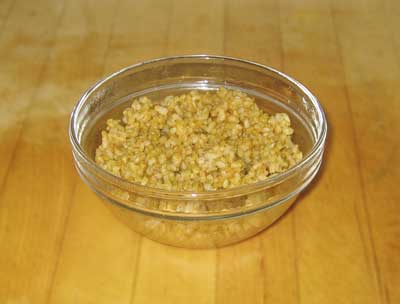
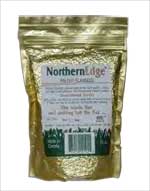 Milled flaxseed is a good natural food product that is high in Omega 3, Alpha linolenic acid and fiber. I prefer to buy Northern Edge brand because it comes in a vacuum-packed, air-tight re-sealable bag. Once the flaxseed has been flaked, it can become rancid very quickly. This particular brand is carefully milled at a cool temperature to preserve the nutrients.
For example, when making oatmeal, I will add the milled flaxseed after cooking. I will never add it to the boiling oatmeal during cooking.
